Division of IT · AI Team

The AI portfolio, built & brokered by DIT for the University of Maryland.

Two paths to enterprise AI at UMD — Products we design and engineer for the UMD community, purpose-built for the academic, research, and operational problems off-the-shelf AI doesn't solve, and Solutions we negotiate, vet, and operate with the world's frontier model providers.

▌ Not sure where to start?

Find your tool.

Answer three quick questions and we'll point you at the right service — and tell you why, including the data classification it's approved for.

Question 1 of 3
What are you trying to do?
↑ Back to top
▌ The Portfolio

Catalog

Filter by category or by data classification. Products are engineered and operated by DIT. Solutions are commercial off-the-shelf platforms DIT licenses, manages, and governs on behalf of campus.

Products — Built by DIT Designed for the UMD community — engineered to a high bar for academic, research, and operational problems commercial AI doesn't solve for us.
Conversational AI · engineered in-house
UMD Virtual Agent
Product

A UMD-built chatbot powered by machine learning and natural language processing — engineered for the way campus actually teaches and operates. Deployed in two flavors that off-the-shelf chatbots can't match because they don't know how Canvas, departments, or institutional procedures work.

  • Virtual Study Assistant — Canvas-integrated, Quiz Mode, video transcription, course-grounded answers
  • Departmental Assistant — an information hub for documented procedures and institutional knowledge
  • Domain-tuned, owned end-to-end by UMD
The team behind the portfolio
Built by DIT.
Run for UMD.

DIT builds for our community what no commercial vendor will — tuned to academic workflows, campus systems, and the way UMD actually works. Have an interesting idea for what's next? We'd love to hear it — reach out and let's talk.

Solutions — Enterprise Partners Commercial AI platforms licensed, vetted, and governed by DIT on behalf of campus.
Cloudforce · Managed Solution
TerpAI
Solution

UMD's premier generative AI offering — built to make advanced AI accessible and affordable for every student, faculty member, and staff member on campus. Delivered in close partnership with Cloudforce, a Maryland-based partner, and operated in-house more closely than any other commercial AI on this page.

  • Everyday task assistance, concept clarification, study guides
  • Analysis, decision support, and creative brainstorming
  • Open access for the UMD community
  • Day-to-day managed by the UMD AI team alongside Cloudforce engineering

Login today to start using TerpAIterpai.umd.edu

OpenAI · Frontier reasoning
ChatGPT EDU
Solution

Access to OpenAI's frontier models with enterprise-grade data privacy — approved for Level 3 data. Custom GPTs restricted to the UMD workspace, extended context, SOC 2 protections.

Connecting a third-party app from inside ChatGPT? GPTs themselves don't need review, but any external app or service a GPT connects to doessee SRM guidance →

Billing change · July 1, 2026.

Moving from fixed pricing to credit-based, tier-allocated billing (Standard / Power / Max).

Log in to ChatGPT EDUchatgpt.com

Anthropic · Frontier reasoning
Claude
Solution

Approved for full university usage with department-procured Claude Teams plans. Hard cap of 150 seats per instance; ~16 Standard seats fit a $5,000 pcard. Admins must disable "Help improve Claude" in Settings → Privacy.

Open Claude (once your department has a Teams plan) — claude.ai

Perplexity · Answer engine
Perplexity Pro
Solution

Real-time web search with citations — designed for evidence-based research, learning, and collaboration. Currently in faculty/staff pilot.

Open Perplexity (faculty/staff pilot) — perplexity.ai

Adobe Creative Cloud
Firefly
Solution

Generative AI for image, photo, video, and graphic workflows — integrated into Photoshop and Illustrator. 1,000 monthly credits for asset generation.
↑ Back to top
▌ At a glance

Compare

Data classification, model family, and procurement path side-by-side.

All 8 services · click any column header to sort. Defaults to Classification, highest first.
ChatGPT Enterprise Solution Level 3 — High OpenAI frontier models Licensed seats · credit tiers
Anthropic Claude Solution Level 3 — High Anthropic frontier models Department-procured
TerpAI Solution Level 2 — Moderate Frontier models Open to UMD community
UMD Virtual Agent Product Level 2 — Moderate Frontier models Course & department deployments
Google Gemini/NotebookLM Solution Level 2 — Moderate Google frontier models Google Workspace
Microsoft 365 Copilot Solution Level 2 — Moderate OpenAI frontier models Microsoft 365 licensing
Perplexity Enterprise Pro Solution Level 2 — Moderate Frontier models Pilot · faculty & staff
Adobe Firefly Solution Refer SRM Creative generative AI Creative Cloud
↑ Back to top
▌ Thinking about a new AI tool?

Start here.

The questions we get most often, answered plainly. Short version: if you don't see it on this page, talk to us — we'd genuinely rather hear your idea early than after you've signed something.

FAQ · 01
"Can I use this AI tool for my work?"
Most-asked

If it's not on this page, it hasn't been vetted yet. Any AI tool that touches UMD data, supports instruction, or costs more than $25,000 needs to clear SRM review before you adopt it.

Before you start that process: talk to the AI team first. We've probably already evaluated something similar, may already have it covered under an existing license, or can give you direct feedback on the tool, the vendor, and how SRM is likely to view it. It saves you time and us duplicate work.

FAQ · 02
"Can I connect an app to ChatGPT?"
ChatGPT

Custom GPTs themselves don't need review — you can build them freely inside the UMD workspace. What does need review is any third-party app, connector, or service the GPT reaches out to from inside ChatGPT — anywhere data leaves the workspace to talk to another system. Those go through SRM.

Not sure if your idea crosses that line? Email us before you build it. A two-minute conversation usually tells you whether it's fine as-is, needs a quick review, or needs a different approach altogether.

The short version.

New AI tool? Talk to the AI team (dit-ais@umd.edu) — we'll help you scope it, share what we already know, and route it to SRM if a review is needed. We'd much rather have the conversation early than fix a procurement problem later.

↑ Back to top
▌ How we govern this

Governance & SRM

The university's Software Risk Management program is the mandatory review every third-party tool — and every DIT-built product — clears before it ships to campus. It's how we keep institutional data safe, FERPA / HIPAA / state procurement rules satisfied, and digital accessibility on track for the April 2027 ADA Title II deadline.

Review team · 01
IT Compliance
Security

Security evaluation against university and federal standards — authentication, encryption, integration risk, and vendor security posture.

Review team · 02
Data Privacy
Privacy

Data-handling practices, contractual safeguards (DPAs), and mapping to the IT-2 Data Classification Standard. Office of General Counsel reviews contracts as needed.

Review team · 03
Accessibility
WCAG 2

Digital accessibility review aligned with WCAG 2 and the UMD Accessible Technology Policy — keeping the university on track for the April 26, 2027 ADA Title II deadline.

The process
From request to approval
15–20 business days
  1. 1 Initiate — submit the SRM Assessment Form with the Workday requisition; check the approved Software List first.
  2. 2 Evaluate — the three teams run coordinated security, privacy, and accessibility assessments with stakeholders.
  3. 3 Approve & register — approval is captured in Workday; the requisition proceeds to procurement.
  4. 4 Re-review — approved tools are re-reviewed every 3 years; rejected tools may re-apply after 1.
Expedited · ~48 hrs available Assessment form
When it's required
SRM triggers
Any one applies

Review is mandatory if the tool meets any of these conditions:

  • Stores or processes Level 3 (High) or Level 4 (Restricted) data
  • Used for instruction or core academic activities
  • Costs more than $25,000
Below those thresholds?

Tools with no sensitive data, no instructional use, and under $25k may qualify for expedited procurement.

IT-2 Standard
Data classification quick reference
Check first

Confirm the highest classification of data you plan to use before choosing a service.

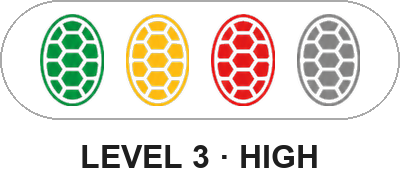
  • Level 1 — Public Public (L1) — Low-risk or public data; no AI tools currently sit here due to enterprise security standards.
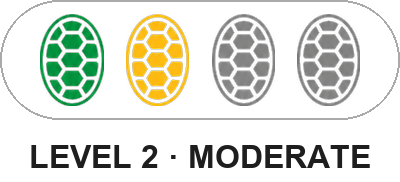
  • Level 2 — Moderate Moderate (L2) — Internal data with manageable risk; most enterprise AI tools on this page fit here.
  • Level 3 — High High (L3) — Sensitive data with severe risk; approved for ChatGPT Enterprise & Anthropic Claude.
  • Level 4 — Restricted Restricted (L4) — Highly regulated data; strict legal controls require mandatory, additional review.
↑ Back to top
▌ Reach DIT teams

Reach DIT teams

Questions about a service, procurement, or starting an SRM review.

Primary
AI Services

For any service in this portfolio — procurement, access, deployment.

Vendor review
Software Risk Mgmt

To bring a new AI tool to campus and start the review process. Office hours: Bi-weekly Thursdays, 10:00–10:45 a.m. via Zoom.

↑ Back to top